
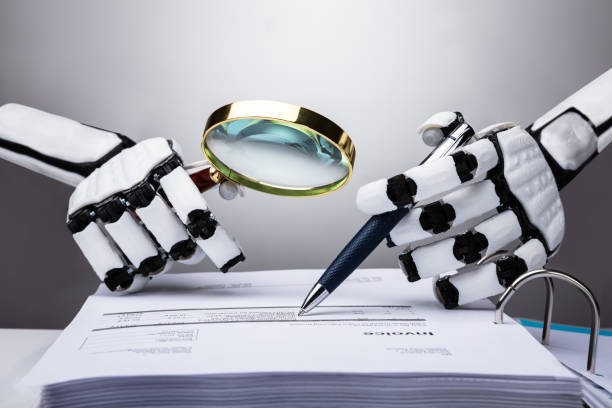
AI watermarking has been an area of concern among many students since AI writing tools have been widely used by them for assignments and projects. However, with new ways to identify machine-generated text, assignment writing services have become their main source of support as a way to navigate university life in the UAE. Moreover, UAE also emphasises on the responsible and transparent use of AI as the official UAE Charter for the Development and Use of Artificial Intelligence outlines transparency, data privacy and accountability. The principles are relevant to AI watermarking since awareness of the concept can help identify AI-generated content and support transparency on how AI can be used for academic work and also provide clear disclosure practices. But as students, it is also important to know how watermarking works to make safer academic choices to ensure you are drafting an essay or an assignment with no pressure.
With universities utilising more advanced tools like Turnitin AI to detect AI, these systems evaluate the structures and keywords you use in your content to determine if the writing is natural or machine-generated. To make your academic life smoother, here is a guide on how AI watermarking works.
What is AI Watermarking?
AI watermarking is a technique that adds detectable signals or patterns to AI-generated content, which provides information about the content’s origin without changing its appearance or meaning. You cannot see the watermark at a glance, but a text, image or audio file that carries the watermark can be detected by special software.
It works on statistical patterns instead of hidden file metadata that when large language models generate content, it selects works based on probability metrics taken from their training datasets. Watermarking algorithms then adjust these probabilities to include mathematical signatures in the AI-generated content.
In addition, during text generation, the algorithm categorises dictionary tokens into primary and secondary lists based on previous word choices and the model favours primary-list words by creating a statistical pattern throughout the output. Even if human readers perceive the content as standard writing, detection software calculates the mathematical probability of these token selections, which helps with AI flagging.
Key Aspects of AI Watermark
Splitting Vocabulary
The system utilises a secret key to divide the vocabulary that it has created into a green list and a red list. Words from the green list are pushed more in comparison to make the content sound more natural. However, since detectors know the secret key, they are able to understand the lack of balance between the red and green words, since human writing uses words from both categories evenly.
So whether you are using AI for project writing or dissertation writing, make sure your writing has a balance in utilising words and terms that make your work sound more authentic and creative, reducing the possibilities of an AI watermark.
Perplexity
When your document is analysed, perplexity is measured since it is a statistical indicator that analyses the predictability of word choices within a sentence context. Because AI models choose highly probable words, AI-generated texts appear to consistently display low perplexity scores.
Burstiness
Burstiness, on the other hand, evaluates the variations in sentence length, structure and the pacing of content across the entire writing. Human writing naturally combines short sentences that give strong emphasis with longer, analytical sentences that give a high score in burstiness. However, AI-generated texts, in contrast, produce uniform sentence structures with minimal variation, which results in low burstiness.
Limitations of AI Watermarking
AI watermarking can be detected across software, but it is far from perfect which generates certain limitations. For example, if your content is heavily edited through paraphrasing, translating or rewriting the passage, it can dilute the statistical pattern and weaken the signal.
Another limitation is that short texts are hard to judge for AI watermarks since there is not enough data to get a reliable result. In addition, not every AI tool can test the watermark, as detection may only work when the model’s developer has shared a way to check it.
However, it is more safe to use more than one AI detector when checking if your content has a watermark, since it is possible to get false positives due to the usage of predictable phrasing by the writer, even if they have not used AI in their assignment writing.
Check Also: How to Write a CIPD Assignment with Real Examples | University Assignment Help – Achieve Academic Excellence
Final Thoughts
The new changes AI models bring in their content and structure can be confusing and overwhelming and require a thorough read on how AI watermarking works and what its core elements are. To ensure you do not compromise on your grades, quality of research or accuracy in the sources you use, students can rely more on assignment writing services over AI-generated content due to the credibility and originality of the content that is delivered.
If you wish to improve the quality of your work with no worries if your content will get flagged for AI, take the support of our services by reaching out to assignmentwriting.ae and submit content that meets your academic standards.